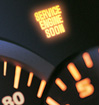
Don’t take chances.
Replace timing belts, tensioners and idlers BEFORE they fail.
Replace timing belts, tensioners and idlers BEFORE they fail.
The right time to replace timing belts. Timing belts are considered wear items and should be checked according to the manufacturer’s recommended service schedule. Most manufacturers suggest replacing the belt between 60,000 to 105,000 miles. Check the manufacturer’s recommendation on mileage in your vehicle's owner's manual.
A broken timing belt will stop a vehicle in an instant.
It can also result in costly engine damage and inconvenience.


Free-Running or Interference Engine? An engine is either “interference” or “free-running” depending on its design. If the timing belt breaks in an interference engine, an open valve may be struck by a moving piston. This can result in serious damage and expensive repairs, and in some cases even a new engine. A “free-running” engine design will not result in extensive engine damages should the timing belt fail. You will still have to deal with the inconvenience of being stranded, towing expense, and the cost of timing belt replacement and necessary timing system components.
Tensioners and idlers are critical components that work hand-in-hand with the timing belt. Tensioners and idlers work together to keep the timing belt properly tensioned. The timing belt system uses idlers and/or pulleys to either change the direction of the belt or transmit power to a component such as a water pump or oil pump.
 Why replace tensioners and idlers? Worn tensioners or idler pulley bearings are the leading causes of timing belt failures. Like timing belts, tensioners and idlers wear out. They need to be replaced BEFORE they fail. Tensioner and idler wear is difficult to detect. Many tensioners that look okay may be at or near the end of their service life. In some cases, the newly installed timing belt may fail after a few thousand miles if the tensioner or idler is worn or loose.
Should timing belt driven water pumps be replaced? You can save yourself considerable expense by replacing an already high mileage water pump at the same time as replacing the timing belt. In both cases the labor cost is a large part of the expense and the labor procedures are basically the same. Doing everything at the same time will result in big long-term cost savings. Save money by asking for a water pump when having a timing system replacement on your vehicle. When replacing a timing belt, have the tensioner, idler and water pump replaced at the same time. The additional cost is insignificant compared to the cost of accessing the timing belt. The new timing belt will be protected from damage caused by failure of these parts.

Don’t take chances. Replace timing belts, tensioners and idlers before they fail! Don’t take chances with costly engine damage – replace timing belts and all related system components at the same time. Change Timing Belts, Tensioners, Idlers, and Water Pumps at the Manufacturer's recommended interval.
Mastermind Enterprises gives FREE Timing Belt Estimates
and a 12 Month/12,000 Mile Nationwide Warranty.
Most timing belt replacements can be done in one day or less.
Most timing belt replacements can be done in one day or less.
Call us at 303-297-AUTO (2886) or send us an email today!