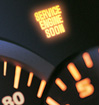
Tampilkan postingan dengan label check engine light. Tampilkan semua postingan

Senin, 28 Oktober 2013

Expensive Car Repair Mistake #2 - Ignoring a Check Engine Light

Ignoring your check engine light or service engine soon light can mean major repairs for your vehicle, possibly even an engine replacement. 

One of the most critical warnings that your vehicle can give you when it is not functioning properly is to illuminate your check engine light or service engine soon light. The main function of a check engine light is to alert the driver to a variety of existing potential problems, even if the vehicle appears to be running normally. At Mastermind Enterprises Auto Repair Shop in Denver, we offer you a FREE computer scan and diagnosis* in our shop.

Don't Just Turn Off Your Check Engine Light - 
Fix the Problem!

The check engine light means that you need to get your vehicle checked out as soon as possible. You don't necessarily have to pull over to the side of the road immediately and call a tow truck. There could be a problem from something as simple as a loose gas cap to a seriously misfiring engine to a faulty catalytic converter.

WARNING!!
Your Check Engine Light May Signal a SERIOUS PROBLEM!
  • Failures that can leave you stranded
  • System malfunction(s) that can damage other systems
  • Up to 40% decrease in gas mileage
  • Catastrophic damage that can cost you more later
  • Emissions test failure
There are numerous systems that turn on the check engine light including the ignition system, fuel injection system or the emission control system. The light will also let you know if there is a simple problem with your engine that is affecting your gas mileage.

Let Mastermind Enterprises diagnose your Check Engine Light!
Call us today at 303-297-2886 or send us an email. 


Check Engine Lights come in different colors including orange, yellow or amber (depending on the vehicle manufacturer). If your check engine light or service engine soon light is flashing, it is telling you there is a more serious problem like a misfire. A misfire can overheat the catalytic converter that could create a fire hazard if it is malfunctioning.

Common malfunctions that illuminate the Check Engine Light are:
  • a loose gas cap
  • faulty oxygen sensors
  • faulty mass air sensor
  • faulty spark plugs or wires
  • faulty catalytic converter(s)
  • poor gas mileage
When you take your vehicle to a shop for a check engine light diagnosis, make sure they have professional ASE Certified technicians who are trained in OBDII diagnosis and repair. The technician needs to understand and examine the data streams including the idle speed, throttle response, engine temperature, fuel system pressure, manifold vacuum, exhaust emission levels and many other symptoms that point to what is causing the problem when plugging in a diagnostic tool to your vehicle's computer.


Your vehicle's computer can also be scanned by an inexpensive code reader or at a local auto parts store for free, but this will not necessarily tell you the problem your vehicle is having. It is a common misconception that the code given by the vehicle's computer instantly "diagnoses" the vehicle. The code simply gives the technician looking at your vehicle a starting point of where to start looking for problems. If you know the codes your vehicle's computer is producing, it is always helpful to the technician servicing your vehicle.

Turning off your Check Engine Light does not repair the underlying problem and the light will come back on later, possibly leading to larger, more costly repairs later. 

If your "Service Required" light comes on, this is different then the Check Engine Light or Service Engine Soon Light. This simply means your vehicle is due for an oil change or other scheduled maintenance. This light is a friendly reminder that it is time bring your vehicle in before you have bigger problems to worry about. It does not tell you that there is a problem with your vehicle.

For any questions you have regarding your vehicle's Check Engine Light or Service Engine Soon Light, call Mastermind Enterprises today at 303-297-2886. We are happy to help you with your vehicle's needs every mile of the way!


* Diagnosis up to 1 hour. Excludes Electrical Diagnosis. With approved repairs in our shop.

Jumat, 05 Juli 2013

Estimate & Appointment Requests

We are celebrating America's birthday weekend with family, but you can still submit an estimate or appointment request for auto repair or service on our website anytime. Of course, you can always call us at 303-297-2886 and leave a voicemail for us, too! Use our 24 Hour Key Drop to drop your vehicle off this weekend. We will respond on Monday when we are back in the shop. Have a great weekend!


Kamis, 29 Maret 2012

Failed Coil Pack, or How to Make a BMW V8 Run Like a Worn Out 4 Banger

Recently my BMW 540i decided that it wanted to run the garbage. I was heading home accelerating hard onto I494 (you know merging into traffic at highway speed) when the car started running really bad. It was definitely misfiring on at least one cylinder possibly more as it seemed to really lack power, it seemed to have the same power as my old Bronco II. So I parked it and didn't want to deal with it right away because I was pissed and didn't want to get more pissed at the moment if I found out I blew the head gasket or cracked the block or head or some other expensive to fix issue. So the next day (Monday) I stopped on my way home from work at  O'reilly Auto Parts to borrow their scan tool to see what codes are being thrown. I pulled the codes and got P0300 (random misfire), P0307 (misfire cylinder #7), and P0420 (catalytic system below threshold bank 1). So what do these codes mean, well P0300 is kind of meaningless as there it means there isn't a consistent misfire so it will usually get set first then when a complete failure happens then another P030X code specific to the problem cylinder will get set. Once a code is set it will remain until erased by a scan tool so seeing both P0300 and P0307 shouldn't be unexpected.  The P0420 makes sense as I was dumping raw un-burned fuel from cylinder 7 into the exhaust and catalytic converter (drivers side which is bank 1).

So now armed with this info the possible causes could be:

  • failed spark plug, cylinder #7
  • failed spark plug boot,  cylinder #7  (this car uses a coil on plug setup so it doesn't have plug wires)
  • failed ignition coil, cylinder #7
  • Failed fuel injector, cylinder #7 (stuck open or leaks like a sieve)
  • Failed head gasket at cylinder #7
  • Burned exhaust valve on cylinder #7
  • Cracked head on cylinder #7
  • Cracked block on cylinder #7
At this point in my head I start fearing that it is a failed head gasket as I am a pessimist and the failure happened when I was accelerating hard (blocks and heads don't tend to crack any more unless you are doing really stupid stuff). So now to start trying to better diagnose the problem. Always start with the easiest things so I played musical coil packs and switched the one on cylinder 7 with the one on cylinder 6. No I turned the key to the run position (everything has power but the car isn't running) and used the scan tool to clear all the codes. I am really hoping to see a P0306, but a P0307 wouldn't necessarily be bad at this point either. So I start the car and let it run and then press the re-scan button. Low and behold I get only 2 codes, P0420, and P0306. Now this could have been better as now I know I need to replace the coil pack that is now on cylinder #6 as the car is now shooting cylinder #7. At this point I can pretty much rule out everything else as the misfire moved with the coil pack. Granted coil packs are more expensive than spark plug boots and spark plugs but are cheaper than a head gasket replacement, valve replacement, head replacement, or engine replacement. They are also a lot easier to replace than fuel injectors even if the cost is about the same.

I went and talked with my mechanic neighbor and he suggested replacing all the coils as well as boots and plugs since I am in there anyway and the Bosch coil packs aren't exactly know for their reliability so might as well do all of them instead of potentially having this problem in the future again. This is what I as planning on doing anyway as once you are in there might as well do everything so you don't have future problems. This is still cheaper than any of the catastrophic failures, and the remaining 7 reasonably good coils can be kept as spares in case one of the new ones fail some time down the road, I do the same thing with belts too. 

Also for piece of mind (that OCD thing I got going on) I also did the following:
  • checked to see if the oil was milky. It will look like chocolate milk if you get coolant in your oil and they get hot and mixed up real good. This is a sign of a problem with the head or block, usually a head gasket.
  • Checked to see if there was an oil film in the coolant, oil leaking into the coolant.  This is a sign of a problem with the head or block, usually a head gasket.
  • Checked to see if there were bubbles in the coolant, combustion gases in the coolant.  This is a sign of a problem with the head or block, usually a head gasket.
  • Checked the oil filler cap for moisture, some cars like my wife's VW have a problem with this but my BMW doesn't so I didn't want to see any. Often this is a PCV problem but it could also be a small bit of coolant mixing with the oil, evaporating, and then condensing on the oil filler cap. Might be a sing of a small head gasket leak.
  • Did a compression test on cylinder #7. This rules out cracks in heads, cracks blocks, head gasket failures, and burned valves.
As all of these checks passed so it is definitely not one of the catastrophic failures which is good. So now I was just waiting for my parts that were on order from the auto parts store. Once received I went and change out the old spark plugs, spark plug boots and coil packs. I cleared the codes and the car fired right up and the sluggishness and misfire has gone away. It was a good idea to also change out the plugs as all but the one from cylinder #7 showed signs of lean burning. This wasn't really a surprise as the emissions system detected unburden fuel (the misfire) and to try to correct it leaned out the fuel air mixture. So with new plugs, boots and coils the care is running great again.

Jumat, 01 Juli 2011

Your check engine light is trying to tell you somethign

One thing that seems certain in older vehicles is that you will see the check engine light. I have seen a lot of people ignore this light as their cars appears to run as good as it ever has but truth is something is wrong. In most cases the check engine light is indicating some emissions related issue or a misfire, other times it could be indicating something much worse. The check engine light indicates that your engine is not running optimally and what ever is causing this should be addressed. Even worse is when your check engine light is flashing, you shouldn't be driving your car when this happens.

To find out the cause of the check engine light being on you will need a scan tool. If you don't own one that is fine as a number of auto parts stores loan them out, or will even do the scan for you. For more information on scan tools see this post of mine. Once you have the code (they have the form of P####, B####, or C####) you will need to figure out what it means. Some scan tools will tell you, but if the one you are using doesn't then you can find out what it means by:
  •  Looking it up in a repair manual for your car
  • Asking the clerk at the auto parts store
  • Looking it up online
If you are going to look it up online I suggest going to this site, or directly putting the code into a search engine like Google and including the make and model of your vehicle as well.You probably aren't the first person to have this problem with your vehicle so by searching for the error code and you make and model you can find out what others did to resolve the problem.

I do like asking the auto parts store clerks as they usually are knowledgeable and if you used their scan tool then you are there already. Sometimes they can provide a detailed printout of what the error code means which is even more helpful. Also you will probably need to purchase a new part anyway which is why the auto parts store lets people use the scan tool for free.

In my experience most codes are caused by old spark plugs (misfire), old O2 sensors (slow sensor, bad reading for a sensor, failed sensor), old spark plug wires or boots (misfire), or some failed sensor (throws a sensor failed code). The good news is that a lot of these issues can be avoided by following a maintenance schedule and replacing these parts before they cause a problem.

Finally in closing let me say that it is always a good idea to solve vehicle issues right away. The check engine light looks the same if you have one error code or 50, and with it on your vehicle is not running as well as it should and may be wasting fuel, polluting, or wrecking other parts without your knowledge.

Sabtu, 25 Juni 2011

Scan tools and why you don't need one

Recently I heard an ad on the radio for a product called CarMD that would allow you to save hundreds on car repairs. So being my naturally inquisitive self I decided to see what it actually is. After going to the CarMD website it looks like this device is just an ODB-II scan tool . It is a on the high end of price for one but I wouldn't recommend buying it. Simple fact is that an OBD-II scan tool can be had for less than $30 if you really need one.

So why don't you need one? A number of auto parts stores have loaner tools and will let you use a scan tool free of charge. I know the local O'Reilly Auto Part stores loan out tools usually you can just leave your licence and use the tool in the parking lot, or if you need to take it with you you just leave a deposit (the cost of the scan tool) and get that back when you bring the scan tool back to them. Also I have heard ads stating that Advance Auto Parts also loans out scan tools and will even do the scan for you. There are probably other auto parts stores that will loan out the tool as well but these were the 2 that I know do. The reason that they loan out the tool is simple, it is convenient for you the customer to find out what what the check engine light means. The people behind the counter know what the codes mean and can tell you what part you need to fix your car so they get a sale out of it and you leave a happy customer.

The only reasons that I would recommend purchasing one of these tools would be if there wasn't an auto parts store near me that doesn't loan the out, or I am using one almost every day. I would say that the 2 times a year or so I need to use one I can spare the 15 minute round trip to the auto part store. I don't have any reason to believe that the CarMD produce is a scam, bad product, or a dodgy company, they seem completely legitimate and there isn't anything magical about a scan tool. For the $119.85 they are asking for a scan tool you could buy an inexpensive OBD-II scan tool (they all read the same data) and about 3 shop manuals that will tell you how to fix the problem with your vehicles.

I am not paid by O'Reilly Auto Parts or Advance Auto Parts, I was only used them as examples of companies that loan out the scan tool. Additionally the scan tools I linked to are only examples, I am not endorsing either of them, nor was I paid to provide links to them. The links are provided for example purposes only.

Selasa, 29 Maret 2011

Check Engine Light Diagnosis & Repair in Denver


Does your check engine light or service engine soon light stay on while you are driving? When you start your vehicle, your check engine light or service engine soon light should come on for a moment and shut off. If your check engine light stays on or comes on sometimes, like most car owners, you probably have little idea what the light is trying to tell you or what you should do. It is the most misunderstood signal on your vehicle and can mean many different things. 

Pay attention to your check engine light - it's telling you there is a problem with your vehicle. It's not going to go away on it's own. 

What the Light Means
Although your vehicle may seem to run fine, it is important to have the issue addressed right away to prevent long-term problems or damage to your vehicle. There are many sensors and computerized components that manage your vehicle's engine performance and emissions. When one of the components fail or the computer finds a problem in the electronic-control system that it can't correct, the "check engine" or "service engine soon" or "check powertrain" light is illuminated. The light could also just be a picture of an engine, possibly with the word "check". 

The light could be telling you something as simple as you have a loose gas cap to an engine with serious problems. It can also prevent you from passing an emissions test, even if the light is not on when your car takes the test.  The good news is that the problem typically can be identified by a stored code in your car's computer. 

The light doesn't mean you have to pull your vehicle over to the side of the road and call a tow truck. It does mean you should get your vehicle checked out as soon as possible to determine the issue. Ignore the light and you risk causing major damage to expensive parts of your vehicle. The light can also tell you your is emitting high levels of pollutants or getting poor fuel economy. In most cases, if there is a problem, the computer will wait to see if it corrects itself before turning on the check engine light. 

What to do
Read your owner's manual to learn the function of the check engine light and every other warning indicator and gauge on your vehicle's dashboard. Generally, you can do this by turning your key to the key-on/engine-off position. Replace any bulbs that are no longer working. If the check engine light comes on, it will either blink or stay on. Either way, you should have it checked out by a mechanic, but a blinking light means you should have your vehicle looked at immediately. In late-model cars, the blinking light typically points to an engine misfire so severe that unburned fuel is being dumped into the exhaust system, where it can quickly destroy the catalytic converter, requiring an expensive auto repair. If this happens to your vehicle, reduce power, and have it looked as soon as possible. If the light is on steady, it is not as urgent, but your vehicle should still be checked out as soon as possible. Automotive computers frequently try to compensate when there is a problem with a vehicle. You may not notice any difference or decline in your vehicle's performance, even though your fuel mileage is suffering and your vehicle is emitting pollutants. 

For a quality diagnosis for your check engine light or service engine soon light, call the auto repair professionals in Denver at Mastermind Enterprises AutoCare Center. We are conveniently located off I-25 & 58th Ave at 5770 Clarkson St, Denver, CO 80216. You can call us at 303-297-AUTO (2886).